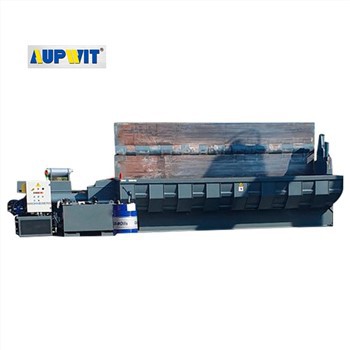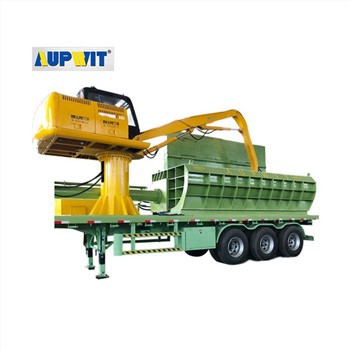

1. Density Varies by Model & Material
- Bale density is not a single fixed value.
- Depends on machine model, compression force, bale size, hydraulic pressure, and scrap type.
- Different HBS models produce different bale dimensions and weight ranges.
- Density should be confirmed for each configuration.
2. Typical Density Range for Scrap Steel
- Scrap steel baler shear machines compress loose light scrap into dense bales for transport and furnace charging.
- Scrap steel bale density can range from about 1.4 to 3.2 tons per cubic meter.
- 2.2 to 2.5 tons per cubic meter is often considered economically efficient for many scrap steel applications.
3. Higher Density with Heavier Models
- Larger HBS models with higher cutting force and stronger compression systems can achieve higher bale density.
- Heavy‑duty models are more suitable for structural scrap, car shells, steel plates, and mixed metal scrap.
- Lighter models may produce lower density bales when processing very bulky or thin materials.
4. Confirm Bale Data Before Ordering
- For export projects, request bale size, bale weight range, compression force, cycle time, and expected density for the actual scrap type.
- Can be positioned as a high‑density scrap baling and shearing solution.
- Final density should be verified with the manufacturer based on material samples and local logistics requirements.