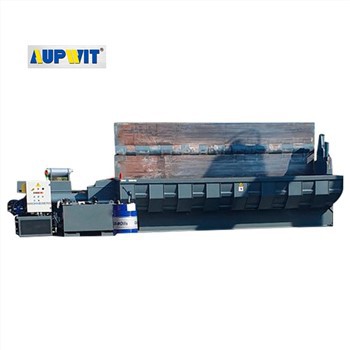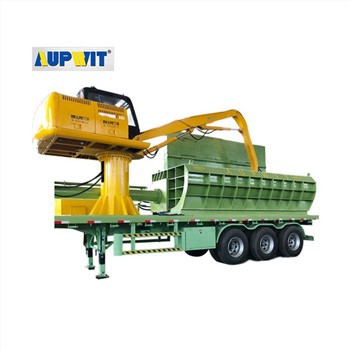

1. Low Speed & High Torque Shearing
- Double shaft shredder reduces material size through two counter‑rotating shafts fitted with interlocking cutters.
- Shafts turn at low speed with high torque.
- Works more like a heavy‑duty pair of scissors than a high‑speed hammer mill.
- Design gives stable cutting force and lower vibration during operation.
2. Shearing, Tearing & Squeezing Actions
- Material enters the shredding chamber; cutters on the two shafts bite and pull it inward.
- Main cutting action comes from the shear gap between adjacent moving cutters.
- Additional tearing and squeezing produced by cutter tips, spacers, and fixed side cutters.
- Material is cut repeatedly until it becomes smaller pieces that fall through the discharge area.
3. PLC Control & Overload Protection
- Most modern units use PLC control for start, stop, forward rotation, and automatic reverse.
- If a hard object or overload is detected, shafts reverse automatically.
- Protects cutters, gearbox, and main motor.
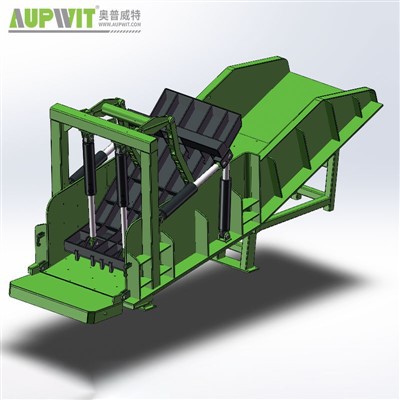
- Some models add a hydraulic ram feeder to press bulky or hollow materials into the cutting zone.
4. Typical Materials & Output Control
- Commonly used for plastics, wood, rubber, tires, electronic waste, light metal scrap, packaging waste, and industrial bulky waste.
- Output size influenced by cutter thickness, cutter spacing, shaft speed, and whether a screen or discharge conveyor is used.
- Mainly a pre‑shredding and volume reduction machine.
- Finer output usually requires a second stage crusher.