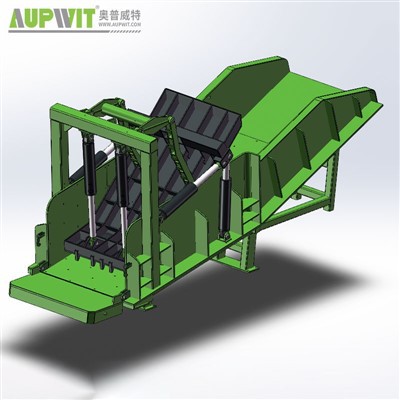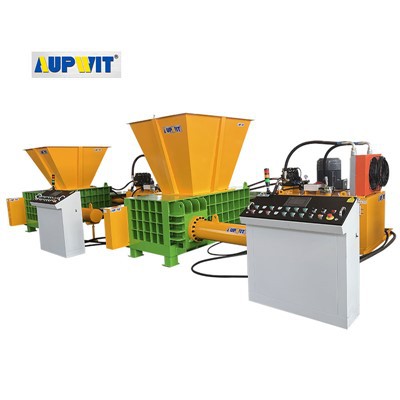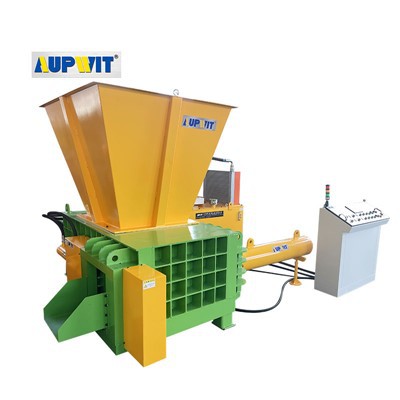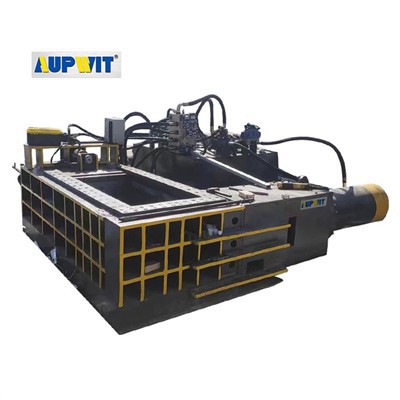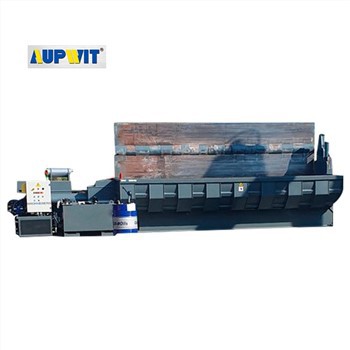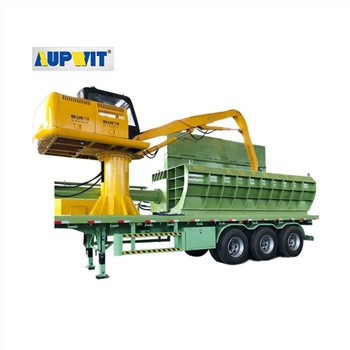

Controlling the quality of Briquette press products requires a continuous process throughout production. Precise control at multiple stages ensures that the finished products are well-formed, meet strength standards, and have stable performance, satisfying subsequent usage requirements.
1 Raw Material Control
2 Pressing Pressure
3 Mold Precision
4 Curing Management
-
Stage 1
Raw Material Pretreatment and ControlThe purity and state of the raw materials directly determine the quality of the finished product. Impurities must be removed from the raw materials in advance to prevent hard foreign objects from entering the briquetting cavity, causing cracking or insufficient strength in the finished product. Simultaneously, the moisture content and particle size of the raw materials must be controlled. Moisture content must be kept within an appropriate range to prevent excessive dryness from hindering molding or excessive moisture from causing the finished product to stick together or mold.Moisture Control Particle Size Impurity Removal
-
Stage 2
Precise Control of Pressing PressurePressure is the core factor in briquetting. The pressure parameters of the briquetting machine must be precisely adjusted according to the characteristics of the raw materials to ensure that the pressure is applied evenly. Insufficient pressure will result in a loose and easily broken finished product, while excessive pressure may cause mold wear and create internal stress in the finished product, making it prone to cracking later. During production, pressure stability must be continuously monitored, and fluctuations corrected promptly.Pressure Adjustment Stability Monitoring Even Distribution
-
Stage 3
Mold Precision Maintenance and GuaranteeThe precision of the mold directly affects the shape, size, and regularity of the finished product. Regular inspection and maintenance of the mold are necessary to remove residual material from the mold surface and prevent adhesion that could affect molding. If mold wear or deformation is found, it must be repaired or replaced promptly to prevent dimensional deviations, surface unevenness, and other problems in the finished product. This ensures mold fit and guarantees a uniform product shape.Dimensional Accuracy Regular Inspection Maintenance
-
Stage 4
Post-Production Curing ManagementAfter pressing, the finished product requires standardized curing to avoid direct stacking that could lead to compression deformation. The temperature and humidity of the curing environment should be controlled according to the characteristics of the raw materials to prevent the finished product from becoming damp, cracking, or weathering. Curing should continue until the specified strength is reached before storage and transportation to further ensure the stability of the finished product quality and reduce breakage and loss.Temperature Control Humidity Management Curing Time